



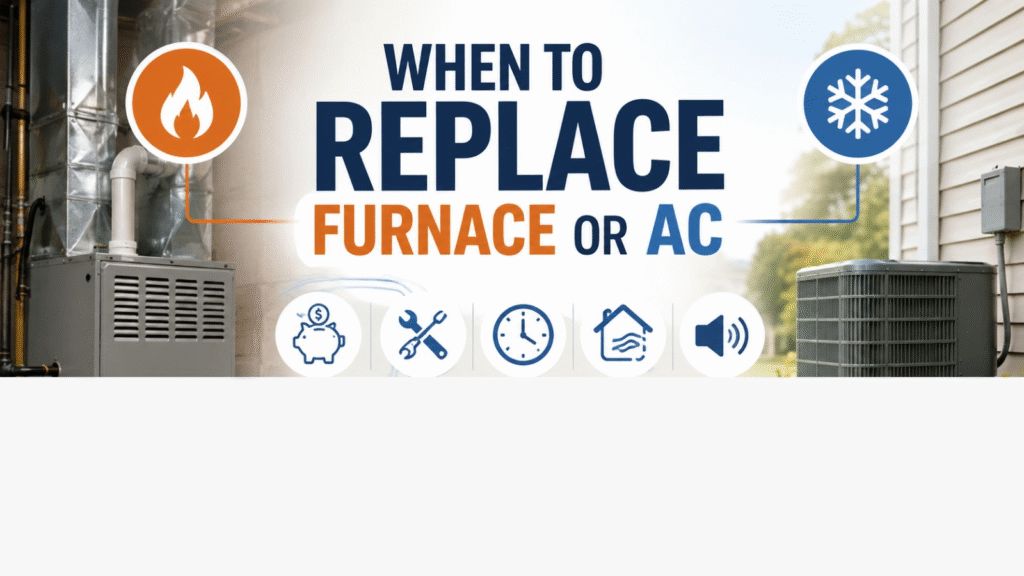
A dependable HVAC system is essential for maintaining a comfortable home in every season. Colorado weather can change quickly, making a properly working furnace and air conditioner especially important. When your equipment starts aging or experiencing repeated problems, you may begin wondering whether another repair is worthwhile or whether it is time for a new system.
For homeowners searching for heating cooling services in Englewood Colorado, understanding the signs of HVAC failure can make this decision easier. One of the most important questions to ask is: When to replace furnace or AC?
Replacing HVAC equipment is a significant investment, so homeowners should consider several factors before making a decision.
How Long Does a Furnace or AC Usually Last?
HVAC equipment does not last forever. With regular maintenance and proper installation, many furnaces can operate for approximately 15 to 20 years. Air conditioners often have a useful life of around 10 to 15 years.
However, lifespan varies considerably. Poor maintenance, excessive use, improper sizing, restricted airflow, and installation problems can shorten equipment life.
If your system is older and beginning to experience multiple problems, it is reasonable to start discussing replacement options with a professional offering heating cooling services in Englewood Colorado.
When to Replace Furnace or AC: Key Warning Signs
There are several signs that can help homeowners determine when to replace furnace or AC.
1. The Equipment Is Near the End of Its Expected Life
Age alone doesn’t always mean replacement is necessary. An older system that is well maintained and operating efficiently may continue working for several years.
However, when an aging system begins experiencing repeated failures, its remaining useful life becomes an important consideration.
If your furnace is approaching two decades of service or your AC is well past a decade and requiring frequent repairs, ask an HVAC professional to evaluate its condition.
2. Repairs Are Becoming Too Expensive
A minor repair on a relatively new system may be an easy decision.
The situation changes when an older unit requires an expensive component replacement. If another major repair is needed only months after previous repairs, continuing to invest in the equipment may not be financially sensible.
A technician can compare the estimated repair cost with the condition and expected remaining life of the system.
This is one of the most practical ways to determine when to replace furnace or AC.
3. Your HVAC System Runs Constantly
Your furnace or AC shouldn’t have to operate constantly just to maintain a comfortable indoor temperature.
Long run times can sometimes be caused by extreme outdoor temperatures, poor insulation, dirty filters, ductwork problems, or an incorrectly sized system. But they can also indicate declining equipment performance.
Before replacing the system, have a professional diagnose the cause.
4. Temperature Control Has Become Inconsistent
Are some rooms comfortable while others are too hot or too cold?
Uneven temperatures can be frustrating and may indicate airflow problems, duct issues, thermostat problems, insulation deficiencies, or aging HVAC equipment.
Professional heating cooling services in Englewood Colorado can help determine whether the issue comes from the equipment or another part of the home’s HVAC system.
Signs Your Furnace May Be Ready for Replacement
A furnace is one of the most important appliances in a Colorado home during winter.
Consider having your furnace professionally evaluated if you notice:
- Repeated breakdowns
- Unusual banging, rattling, or squealing
- Increasing heating expenses
- Weak airflow
- Frequent cycling
- Difficulty maintaining the desired temperature
- Uneven heating
- Expensive repairs
- An aging system
Some noises or performance problems can be repaired. Others may indicate significant wear.
If an older furnace has multiple problems, replacement could be more practical than continuing with repeated repairs.
Signs Your AC May Be Ready for Replacement
Air conditioners also provide important comfort during warm weather. An aging AC may gradually lose its ability to cool your home efficiently.
Common warning signs include:
- The AC struggles to reach the thermostat setting
- Cooling takes much longer than it used to
- Frequent breakdowns
- Increasing electricity consumption
- Poor airflow
- Strange noises
- Excessive moisture
- Uneven cooling
- Major component failures
If several problems appear at the same time, it may be time to discuss replacement with a professional HVAC company.
Should You Repair or Replace Your HVAC System?
There is no universal answer. The best choice depends on the age and condition of the equipment.
Repair May Be Better When:
A repair may be reasonable when:
- The equipment is relatively new
- The problem is minor
- Repair costs are manageable
- The system has been reliable
- Energy efficiency remains acceptable
Replacement May Be Better When:
Replacement may make more sense when:
- The system is approaching the end of its lifespan
- Repairs are happening frequently
- Major components have failed
- Energy costs are increasing
- Comfort problems continue
- Repair costs are becoming significant
A professional inspection can help you make the decision based on your specific situation.
Don’t Ignore Rising Energy Bills
Increasing utility bills can be an early warning sign that your HVAC system is losing efficiency.
Older equipment may require more energy to produce the same amount of heating or cooling it provided when it was newer.
However, rising energy costs can have many causes. Changes in utility rates, weather, insulation, duct leakage, and thermostat settings can all contribute.
That’s why homeowners should have the entire system evaluated instead of automatically assuming the equipment needs replacement.
Regular Maintenance Can Delay Replacement
Knowing when to replace furnace or AC is important, but preventative maintenance can also help you get more life from your current equipment.
Regular HVAC maintenance can include:
- Checking system components
- Inspecting electrical connections
- Replacing or checking filters
- Checking airflow
- Cleaning appropriate components
- Inspecting ductwork
- Testing system operation
- Identifying potential problems
Maintenance doesn’t make an HVAC system last forever, but it can help identify problems earlier and maintain reliable performance.
Why Professional HVAC Evaluation Matters
Replacing a furnace or AC is not simply about choosing the newest model. The equipment needs to be appropriate for your home’s size, layout, insulation, and heating or cooling requirements.
Incorrect sizing can result in poor comfort, unnecessary cycling, and inefficient operation.
That’s why professional heating cooling services in Englewood Colorado are valuable when you’re considering a replacement.
An experienced technician can evaluate your existing equipment, identify the underlying problems, discuss repair options, and explain whether replacement is appropriate.
Planning an HVAC Replacement
If your system is old but still operating, you may have an advantage: time.
Instead of waiting for an emergency breakdown, you can research your options in advance. You can compare equipment, installation requirements, warranties, and available service options.
Planning ahead can also help you avoid being without heating or cooling when outdoor temperatures are extreme.
If your furnace or AC has already shown several warning signs, start exploring replacement options before a complete failure occurs.
How to Choose Heating Cooling Services in Englewood Colorado
When searching for heating cooling services in Englewood Colorado, look for an HVAC professional who can provide more than a quick repair.
A good service provider should be able to inspect your equipment, explain the problem clearly, discuss repair and replacement choices, and answer your questions about maintenance and efficiency.
Clear communication is particularly important when you’re deciding whether to spend money on another repair or invest in a replacement system.
Frequently Asked Questions
When to replace furnace or AC?
Consider replacement when your equipment is old, unreliable, inefficient, requires frequent repairs, or no longer provides consistent comfort. A professional inspection can help determine whether replacement is necessary.
Should I replace my furnace and AC at the same time?
Not always. If one system is relatively new and operating properly, replacing only the failing equipment may make sense. However, if both systems are similarly aged, replacing them together may be worth discussing.
Can regular maintenance extend HVAC life?
Yes. Regular professional maintenance can help identify problems early and keep equipment operating properly. It cannot prevent normal wear and eventual equipment replacement.
Is an expensive repair worth it on an old system?
It depends on the equipment’s age, condition, repair history, and expected remaining life. If a major repair is required on an aging system with frequent previous failures, replacement may offer better long-term value.
What should I do if my furnace or AC suddenly stops working?
First, check simple issues such as the thermostat settings and HVAC filter. If the system still doesn’t operate, contact a qualified HVAC professional rather than repeatedly attempting repairs yourself.
Final Thoughts
Knowing when to replace furnace or AC can help you avoid unnecessary expenses and unexpected comfort problems. Pay attention to equipment age, repair frequency, energy consumption, unusual operation, and indoor comfort.
If you’re experiencing HVAC problems, professional heating cooling services in Englewood Colorado can provide the inspection and guidance needed to determine your next step.
Whether your system needs maintenance, repair, or complete replacement, addressing problems early can help you maintain a more comfortable and reliable home throughout the year.